Quick answer
When several clients need attention, choosing the next task requires more than comparing due dates. Consider the consequences of delay, whether a task is ready to start, and whether it realistically fits the time available.
Working for multiple clients creates an awkward problem: each client can reasonably believe their work deserves attention first.
Your task list doesn't solve that conflict. It just keeps a record of it.
A realistic Tuesday afternoon
You have 55 minutes before your next meeting and three things waiting:
| Task | Estimated time | Deadline |
|---|
| Finish Client A's presentation | 85 minutes | Tomorrow |
| Revise Client B's contract notes | 40 minutes | Today |
| Upload Client C's receipts | 10 minutes | Next week |
Starting Client A's presentation might be tempting because it's the biggest project. But if it needs an uninterrupted 85 minutes, today's 55-minute gap may not be suitable for finishing it.
Client C's receipts are easy, but completing the quickest task isn't necessarily the best use of your afternoon.
Client B's notes are due today and could fit—provided you have the information needed to complete them.
That's a much more useful basis for choosing the next task than inbox order.
Use four checks before starting
1. What happens if this waits? A contractual deadline, a client dependency, and a routine administrative task carry different consequences.
2. Is the task actually ready? If you need a client's answer or a missing document, a task may be urgent but impossible to complete right now.
3. Does it fit the available window? Allow for opening files, finding your place, and wrapping up. A 50-minute task may not fit neatly into a 50-minute opening.
4. What does finishing it make possible? Sometimes completing a modest task unblocks another person. That's worth considering alongside the deadline.
What if none of the important work fits?
Don't automatically fill the time with meaningless busywork.
You might prepare materials for a longer task, resolve a blocker, or reserve the next uninterrupted window for work that needs it.
And if the total workload simply exceeds your available hours, a task app cannot manufacture more time. Something may need to be renegotiated.
How GapRail approaches this
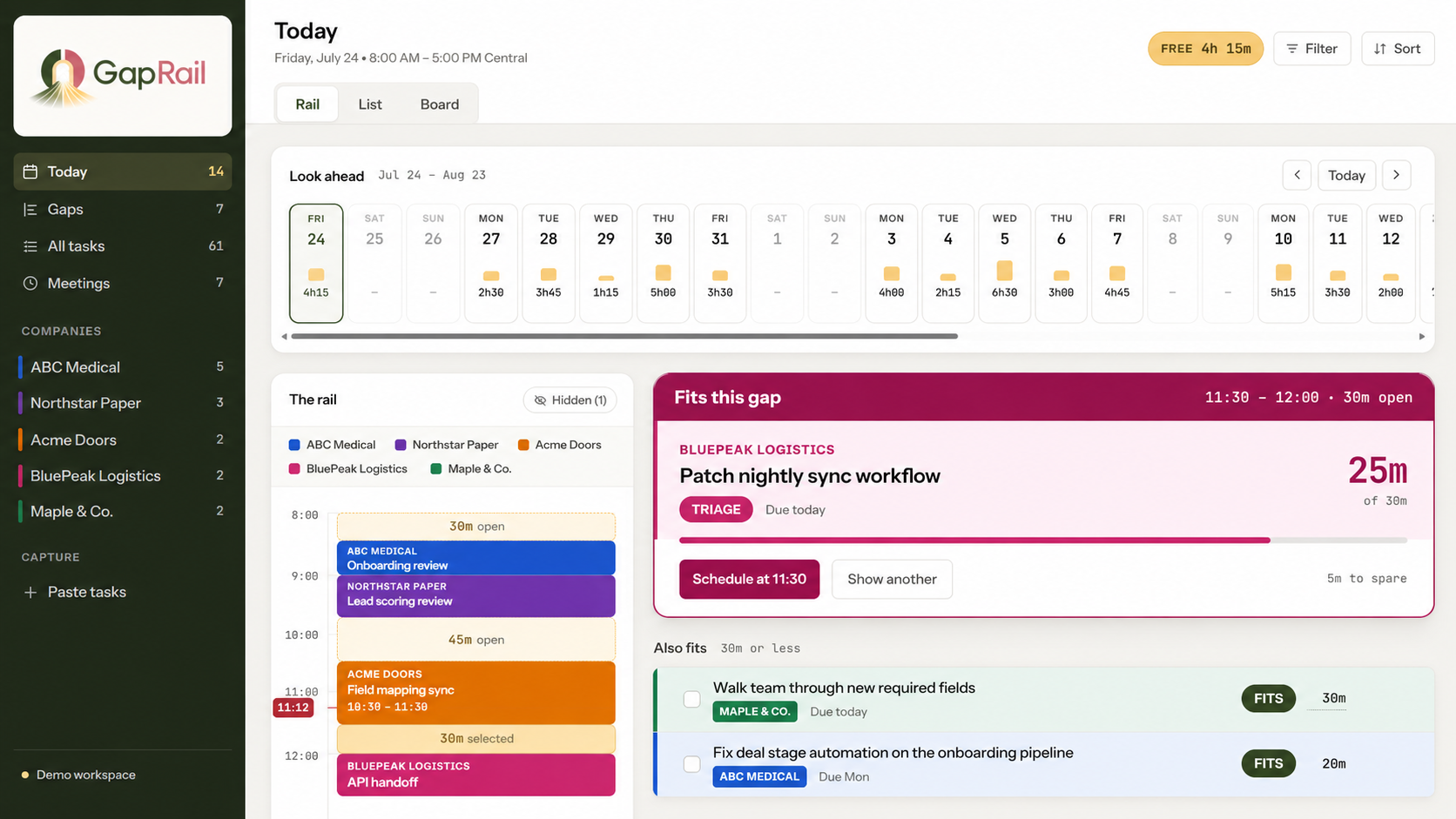
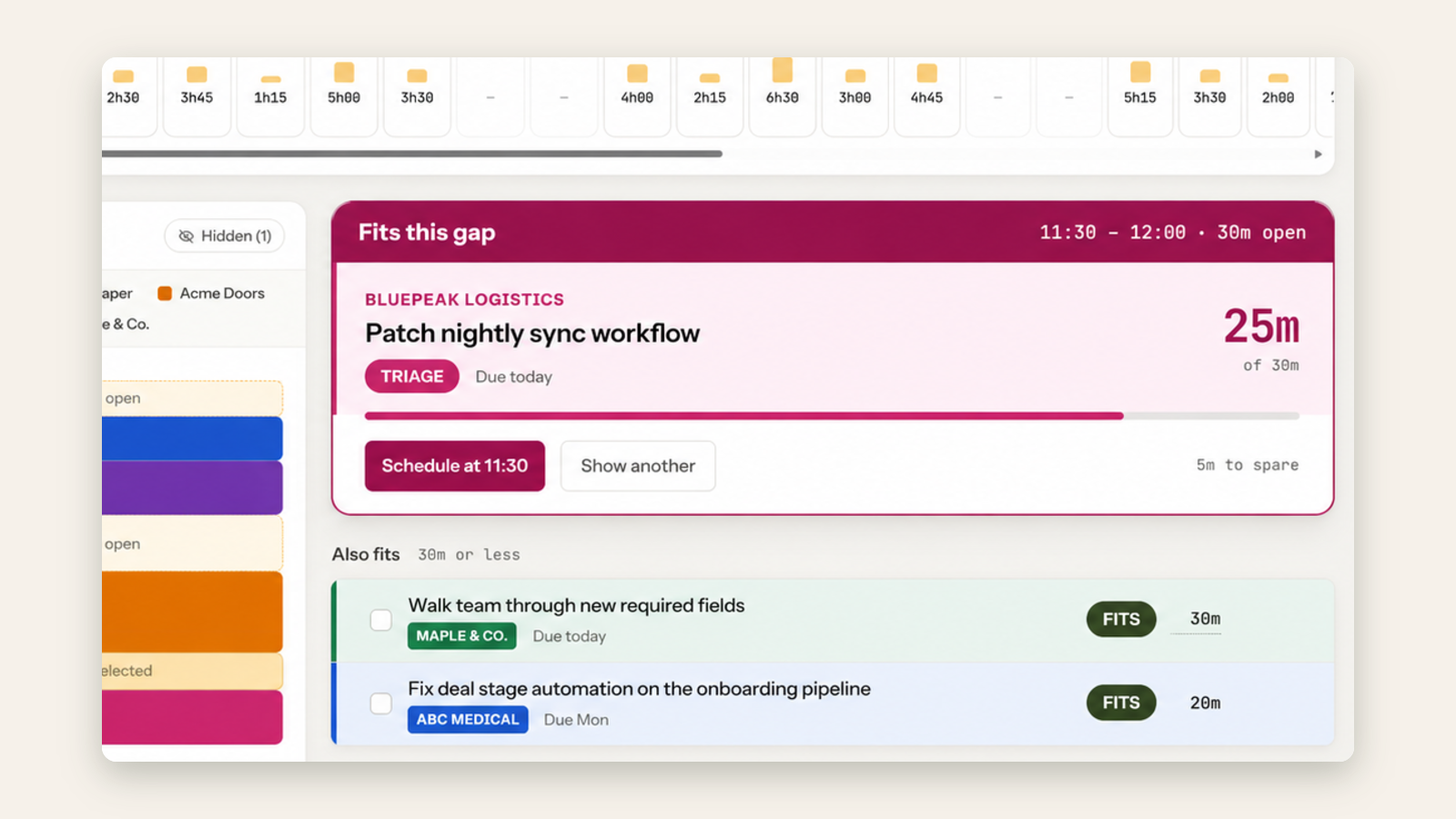
GapRail separates two decisions: which tasks matter most and which appropriate tasks fit the available time.
That distinction is useful for people managing several clients or projects without wanting to manually recalculate their priorities after every meeting.
It doesn't take over client relationships, assign work across a team, or promise to make every deadline achievable.
It helps you decide where to start.
See how GapRail works at gaprail.com. The free trial lasts seven days and does not require a credit card.